Working smarter with robotics in food packing
A practical look at using automation to control labour costs, remove bottlenecks and build more responsive food-packing operations.
Food packers are under sustained pressure to operate more efficiently while managing labour shortages and rising costs. Those shortages have reportedly cost the UK food and drink industry an estimated £1.4 billion through lost output. For producers still reliant on manual sorting, packing, palletising and material handling, maintaining throughput can therefore become increasingly difficult.
Thoughtfully applied robotics can ease that pressure. By automating repetitive packing and processing tasks, producers can control costs, move people into more valuable roles and improve their ability to respond to changing demand. The objective is not automation for its own sake, but a better division of work between dependable machinery and skilled employees.
Smarter processing, better use of people
Repetitive handling makes up a significant share of labour activity in many food-packing operations. Robots can take on consistent picking, placing and sorting motions, while employees concentrate on work that benefits from human judgement, including quality inspection, supervision and line optimisation. This approach helps businesses make better use of scarce labour without losing the oversight required in food production.
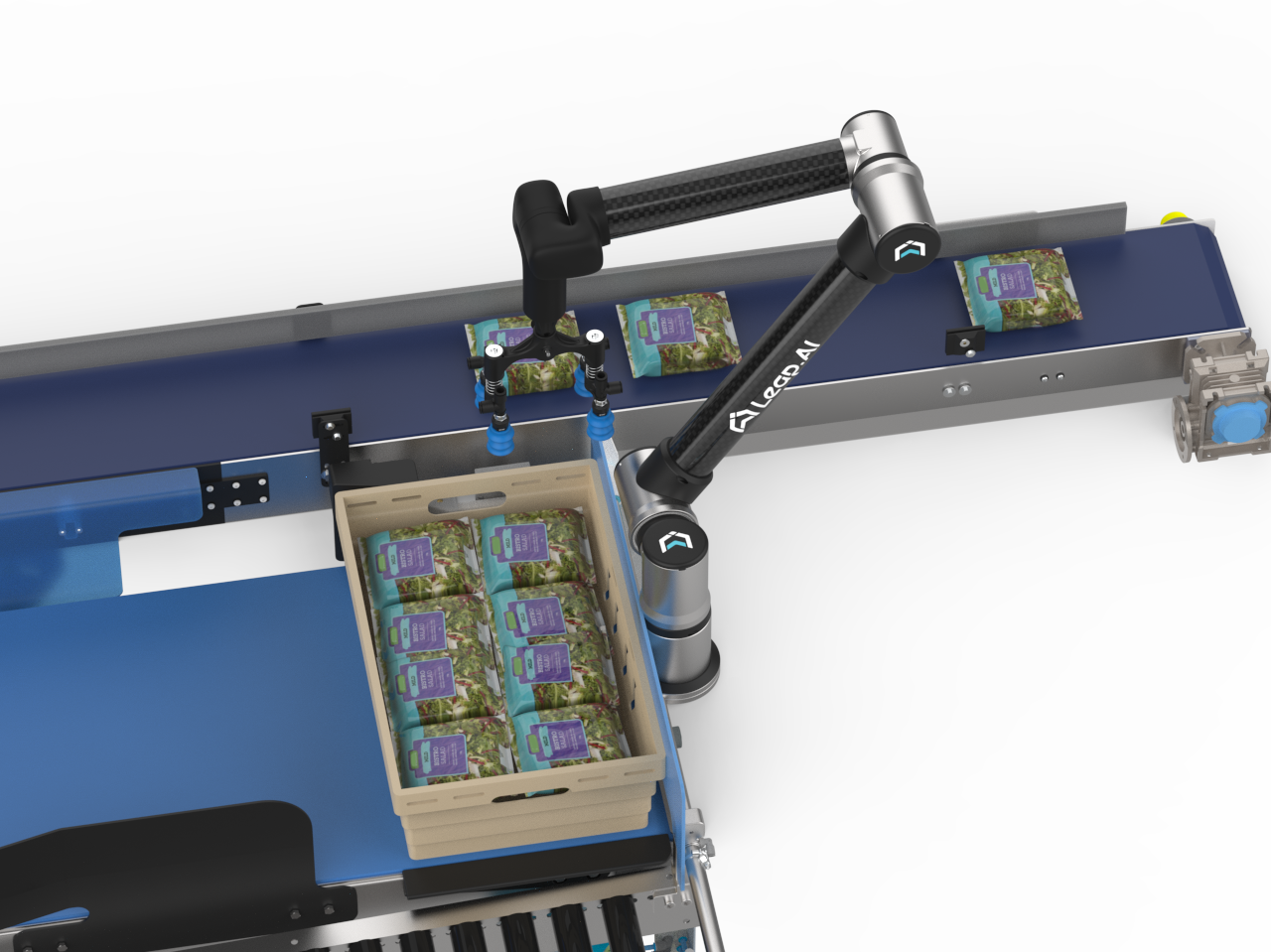
Leap AI’s PikPak™ system combines adaptive robotics, sensor technology and straightforward operation to pick, place and pack food products reliably and economically. It is designed to work safely alongside employees, taking over repetitive motions and releasing people for higher-value tasks elsewhere on the line.
Adaptability is central to the system. Food packers may need to switch between product varieties, formats and order volumes, often at short notice. PikPak™ supports efficient changeovers so equipment can remain productive across a varied schedule rather than being limited to one narrow application. Configuring the system around each customer’s products and operating environment helps make automation practical in real production conditions.
Removing bottlenecks at EVG
EVG introduced PikPak™ when it needed to increase packing throughput without compromising quality. Flexible automation removed bottlenecks at the packing stage, enabling the business to meet growing customer demand while maintaining its required standards.
The result was a 50% annual reduction in end-of-line labour costs. Beyond the headline saving, automating the repetitive portion of the process allowed EVG to allocate its workforce more effectively and get more value from the wider production line.
Consistency and uptime are also important considerations. Automated equipment can perform the same defined movement repeatedly and support longer periods of operation at a stable rate. When properly integrated with conveyors, sorting machinery and the rest of the line, that reliability can help producers make fuller use of their fixed assets and reduce the disruption caused by packing constraints.
A more responsive food-packing industry
The benefits of intelligent automation extend beyond a single line or business. Lower operating costs and smaller efficient order sizes can help food packers react more quickly to seasonal peaks, shifts in consumer demand and more specialised orders. Greater flexibility makes it easier to handle a broader product mix while protecting margins.
Savings can also be redirected into higher-value products and services. The original opportunities identified include speciality diets, sustainable packaging, traceability platforms, home delivery and quality-testing programmes. Rather than tying people to repetitive handling, automation can create capacity for the development and control work that helps a producer remain competitive.
The strongest case for robotics in food packing is therefore operational: use machines for repeatable motions and people where judgement, adaptability and expertise add most value. With the right application and integration, that balance can reduce labour pressure, improve throughput and give food producers greater resilience as demand changes.
Vivienne Hsu, CMO, Leap AI — media@helloleap.ai
Looking to improve your packing operation?
Find out what PikPak™ could do for your lines — we aim to respond within 24 hours.